‘Your Voice Carries’: Clarke Lecture Explores Sound, Identity and Self-Expression
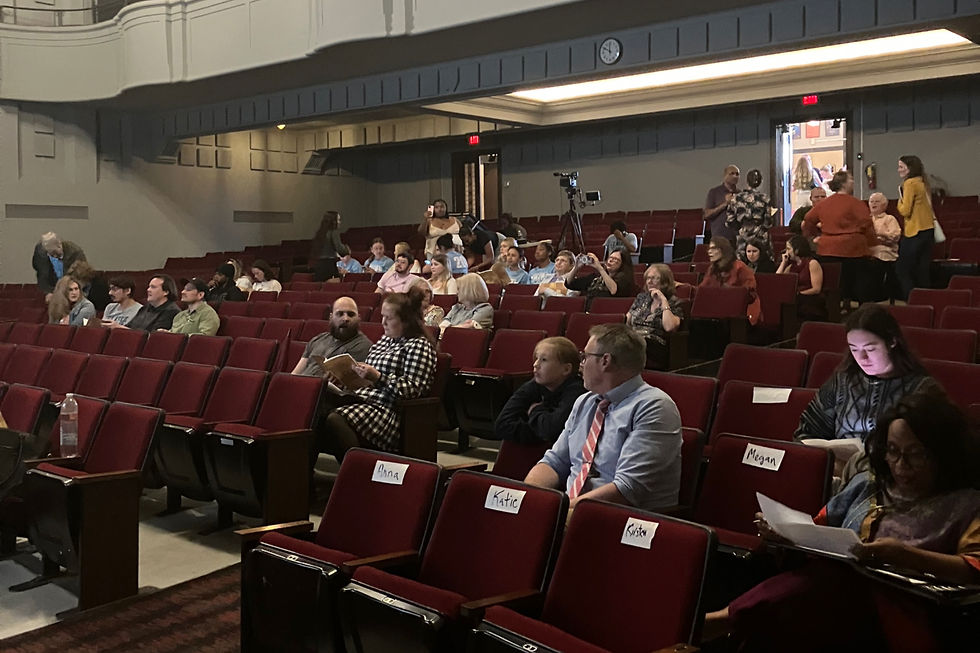
Dr. Aimee Taylor McClure invited the Clarke University community to listen a little more closely to something people use every day: their voices. Through interactive demonstrations, personal stories and humor, McClure explored how voices shape identity, connect people and influence the way they see themselves and others. Titled “Your Voice Carries: Sound, Silence & Self,” the October 21st, 2026, lecture was part of Clarke’s annual Mackin-Mailander Lecture Series. McClure initially considered discussing artificial intelligence but ultimately chose a topic she felt deserved more attention: the physical voices people use to express themselves as well as the experiences that can lead them to silence those voices.

McClure began by exploring the physical process of producing sound and forming words. Instead of simply explaining the science behind speech, she invited audience members to participate in vocal exercises, turning the subject into a shared experience. The approach made the mechanics of sound more tangible while setting an engaging tone for the discussion that followed. From there, McClure explored how voices carry meaning beyond the words being spoken. Dialects and accents, for example, can reveal connections to a person’s background and culture, but they can also become targets of stereotypes. McClure discussed dialects and accents, including her own Appalachian accent, which she had suppressed because of the stereotypes associated with it, although it still comes back from time to time. Her experience illustrated how a person’s voice can become something they feel pressured to change to fit others’ expectations. Although accents and dialects are natural expressions of language and culture, social judgments can influence whether people feel comfortable using them.
McClure also shared a more personal experience with losing her voice in a different sense. Having grown up singing and performing, she eventually stopped singing for years due to a thyroglossal duct cyst. The experience changed her life, leaving her struggling with fear and separated from an important part of herself. That silence, however, was not permanent. McClure eventually rediscovered her voice and returned to something she had once loved, demonstrating that a period of silence does not have to define the rest of a person’s life. Over time, however, she rediscovered her voice and returned to something she loved. That experience brought another dimension to the lecture’s central theme: Silence does not have to be permanent, and sometimes it is necessary to heal. Whether someone feels pressured to hide an accent, struggles to express themselves or loses access to a meaningful part of their identity, finding a voice again can be a process of reclaiming something important.
By balancing educational demonstrations with personal storytelling and humor, McClure approached the subject from both a scientific and a deeply human perspective. Voice was presented not simply as a means of communication, but as a way people express identity, preserve culture and build connections with others. Ultimately, “Your Voice Carries” encouraged attendees to consider the voices they use, the voices they have felt pressured to suppress and the parts of themselves they may want to reclaim. The lecture offered a reminder that although voices can be shaped by fear, stereotypes and life experiences, those forces do not have to determine what comes next.


Comments